The best sunset wedding photo locations in DC are the ones that face west, sit near open water or a low skyline, and let your car pull up close. Sunset in Washington falls over the Potomac, so the Memorial Bridge, the Tidal Basin and the riverfront parks give you the warmest light with the least walking.
This post covers how the light actually behaves in each season, which spots work for a short golden-hour window, and how to move a wedding party between two or three of them without losing the light. It also covers permits, crowds and the practical job of parking a limousine or party bus while you take photos.
Key takeaways
- Plan the last photo stop to face west, toward the Potomac, for the warmest light.
- Sunset comes early in winter and late in summer, so build the route around the month.
- Two or three stops is realistic in the golden-hour window; more means rushing.
- Monument grounds have rules on permits and equipment; confirm with the National Park Service.
- Book transportation with the photo stops written into the run sheet, not added on the day.
How Sunset Light Works in Washington DC
Washington sits on the east bank of the Potomac, so the sun sets across the river, behind Arlington and the Virginia shoreline. That single fact shapes everything about golden-hour photos here: a spot that looks west over open water or a low skyline keeps its color longer, while a spot with buildings or trees to the west loses the sun early. When you are choosing locations, check what lies between your camera and the horizon before you check anything else.
The usable window is short. The richest light usually arrives in the last stretch before the sun touches the horizon, and it fades quickly once the sun is down. Plan on a working window of roughly half an hour of good color, not an hour, and treat the minutes before it as travel and setup time rather than shooting time.
Cloud cover changes the plan more than the calendar does. A clear evening gives you strong directional light and long shadows off the monuments; a high, thin cloud layer can soften the light and stretch the color past official sunset. A heavy overcast flattens everything, and on those evenings the better images usually come from the blue hour after the sun drops. Build a backup into your schedule rather than hoping the sky cooperates.
Sunset Times by Season and What They Mean for Your Schedule
Sunset in Washington moves across a wide range through the year, from before five in the evening in midwinter to after eight-thirty in midsummer. That swing decides whether golden-hour photos fit before your reception or have to wait until the next day. The table below gives the rough pattern by season so you can sketch a timeline before you confirm anything with your photographer or your car.
Treat these as planning ranges, not appointments. The exact minute shifts through each season, and the official time for your date is published by the naval observatory and repeated in weather apps. Check it for your specific date, then work backward through travel and setup to find your departure time.
| Season | Roughly when sunset falls | What it means for your schedule | Watch out for |
|---|---|---|---|
| Late fall and winter | Shortly before five to about five-thirty | Golden hour lands in mid-afternoon, so photos usually happen before the ceremony or between an early ceremony and the reception | Cold, early darkness and holiday traffic; couples often shoot the day before or after |
| Early spring | Around six to seven-thirty, moving later quickly | A late-afternoon ceremony can flow straight into golden hour | Cherry blossom crowds near the Tidal Basin compress the window |
| Late spring | Around eight to eight-thirty | Sunset comes after most receptions start, so plan a first-look session earlier or step out briefly | Guests arrive while you are still shooting; keep the route tight |
| Summer | Around eight-thirty at the latest | Golden hour falls during dinner or dancing, which suits a short exit rather than a full tour | Heat and humidity; build in water and shade breaks |
| Early fall | Back toward six-thirty to seven-thirty | The most forgiving stretch of the year for fitting photos between ceremony and reception | Earlier dusk arrives fast by late October |
Sunset Wedding Photo Locations in DC That Face the River
These are long-established, well-known spots that look west or southwest toward the Potomac, so they hold the light when other parts of the city have gone flat. For a wider list beyond golden hour, see our guide to the best wedding photo spots in Washington DC. Each of these works best with a car waiting close by, because the walk between them eats the light.
Lincoln Memorial Steps
The steps face the Reflecting Pool and the river beyond, which makes this one of the most reliable west-facing views in the city. Late light rakes across the columns and the pool, and the memorial itself stays photogenic as the sky colors. It is busy at sunset on pleasant evenings, so a short, focused session works better than a long one.
Tidal Basin
The basin opens to the west and southwest, and the water doubles the color in the sky. The Jefferson Memorial and the bridge toward the Virginia shore give you several angles within a short walk. In cherry blossom season the paths are crowded and the light window is precious, so plan your entry and exit in advance.
Memorial Bridge Area
The bridge carries traffic between the Lincoln Memorial and Arlington, and the riverbanks at either end give you open western views. The classical arches and columns frame the sky well, and the water below catches the last light. Standing on or near a working bridge calls for care with traffic, so keep the group together and let your photographer lead.
Georgetown Waterfront
The waterfront park along the Potomac looks west across the river, with the Key Bridge and the Virginia shore in view. Late light comes off the water and the old brick and cobblestone streets nearby give you a second look within a few minutes. Our Georgetown photo route by car covers how to link the waterfront to the side streets.
East and West Potomac Parks
The long green strips between the memorials and the river offer open sky and fewer hard edges than the monument plazas. The light stays clean here because little blocks the western horizon. They are also easy to reach by car and give a driver room to wait without blocking traffic.
Locations That Work After the Sun Drops
Once the sun is down, the useful window shifts to blue hour, the stretch when the sky holds a deep even color and the city lights come on. The Capitol's west front is a strong choice then, because the dome is lit and the grounds open toward the Mall. The sky still carries color for a short while, and the contrast between the lit building and the blue sky is the reason to go.
The Wharf and the Navy Yard riverfront also come alive after sunset, with the water, the boats and the lit buildings giving you a different mood from the golden-hour shots. The Anacostia and Potomac shorelines there reflect the lights and give your photographer room to work. Our guide to night wedding photos with DC's lit-up monuments covers the timing and the technique in more detail.
The practical point is that a car waiting nearby matters more after dark than before it. The blue-hour window is shorter than golden hour, and a driver who has already scouted the pull-off spot saves you the minutes you would otherwise spend circling. Give your chauffeur the order of stops and a contact number, and let them hold the vehicle close while you shoot.
Permits, Crowds and the Rules on Monument Grounds
Most of the classic sunset backdrops sit on National Park Service land, and the Park Service regulates commercial filming, large photo setups and equipment that takes up space on the grounds. The rules are not the same everywhere and they change, so treat them as something to check rather than assume. Read the current guidance on the Park Service website for the memorial or park you have in mind, or call the site directly, and confirm what applies to your photographer and group size.
A couple with a photographer and a small lighting kit is usually a different case from a full wedding party with tripods, reflectors and a video crew. If your photographer plans to bring stands, softboxes or drones, ask early how they handle permits and whether they will file on your behalf. Build the answer into your timeline, because approval takes time.
Crowds are the other variable you cannot book. The Tidal Basin, the Lincoln Memorial steps and the waterfront parks draw visitors at sunset all year, and pleasant weekends in spring and fall can be genuinely busy. Plan shots around the edges of the frame and accept a short wait for a clean view. A weekday evening, or a spot a short walk from the main path, usually gives you more room.
A Realistic Golden-Hour Route by Car
A workable golden-hour route uses two or three stops and moves with the light, starting west and finishing east as the sky cools. The drive times below assume normal evening traffic; on a Friday in summer, add time to every leg.
- Start at the Memorial Bridge and the Lincoln MemorialArrive about 45 minutes before sunset for warm light on the bridge and the river behind it, with the Virginia skyline catching the last sun.
- Move to the Tidal BasinA five- to ten-minute drive or a short walk brings you to the water, where the Jefferson Memorial reflects the color and the sky stays bright a little longer.
- Cross into East Potomac ParkAnother ten minutes by car puts you on the peninsula with open water on both sides, low horizons and far fewer people than the memorials.
- Finish at the Wharf or Navy YardA fifteen- to twenty-minute drive east gets you to the riverfront after the sun drops, when the lights come on and the sky holds its color.
- Keep the last stop shortPlan twenty to thirty minutes for the afterglow, because the light fades quickly and your photographer will want the car close by for the ride to the reception.
Getting Your Wedding Party and Photographer There
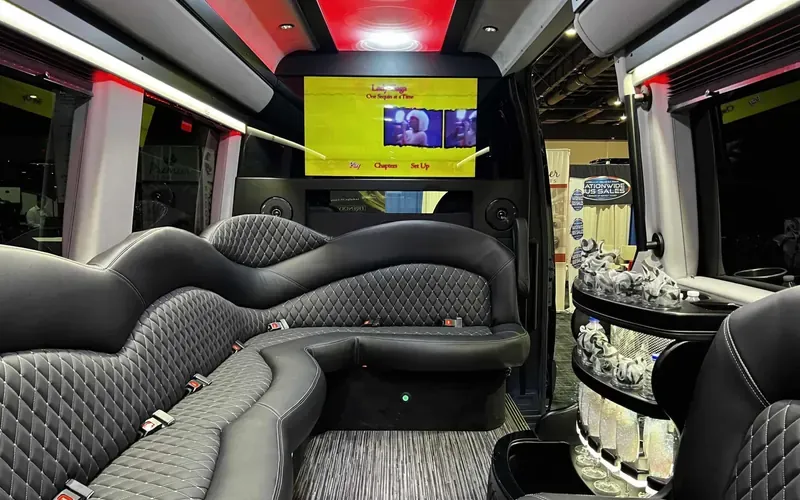
The vehicle you choose should match the number of people who actually need to be in the photos, not the full guest list. A bridal party of eight fits comfortably in a stretch limousine, while a group of fifteen or more is easier in an SUV stretch limo or a wedding party bus where everyone rides together and no one waits on a curb.
- Match the car to the photo groupCount the couple, the photographer, the assistant and anyone helping with a dress or a veil, then add the bridal party.
- Keep the photographer in the loopShare the route and the stop order in advance so they can plan lenses and lighting for each location.
- Name a contact on the dayGive the chauffeur one phone number for the photographer or planner so a change of plan reaches the car quickly.
- Ask where the car can waitConfirm a legal loading spot near each stop, since memorial grounds and the Wharf have restricted curb space.
- Build in a buffer at each stopTen extra minutes covers a slow walk in heels, a dress adjustment or a crowd that will not clear.
- Bring a wrap or jacketThe riverfront cools fast after sunset, and the wind on the bridge and the Tidal Basin is stronger than it feels inland.
- Keep water and a touch-up kit in the carA small bag with blotting papers, pins and a comb saves a return trip to the hotel.
Planning the Transportation Around Your Sunset Photos
We treat the photo tour as its own booking, separate from the ceremony and reception runs, because the timing is driven by the sun rather than by your venue. You tell us your ceremony end time, your photographer's preferred stops and how long they want at each one, and we build a route that starts west and works east. The wedding photo tour transportation page explains how that booking works.
Every quote is written and itemized before you book, covering the vehicle, the hours, gratuity, tolls, parking and any décor or extras you request. Nothing is reserved until you read it and accept it. If you want red carpet, a "Just Married" sign or a particular vehicle for the photos, say so at this stage, because those touches are arranged when booked and appear on the quote.
On the day, your chauffeur works from one written run sheet shared with you or your planner and stays in touch with your named contact as the light changes. That matters most in the last half hour before sunset, when a delayed ceremony or a slow portrait session can cost you the best light. If you are ready to plan the route around your date, get a free wedding quote and we will write it out stop by stop.
Sunset moves earlier through the fall and winter, so a late-afternoon ceremony in November leaves far less golden-hour time than the same ceremony in June, and the route should shrink accordingly. If your venue is outside the city, the drive in and out has to fit inside the booking, which is why we ask for the venue address when we quote. If the forecast turns, the rainy day photo ideas post covers covered and indoor alternatives that still use the car you have booked.