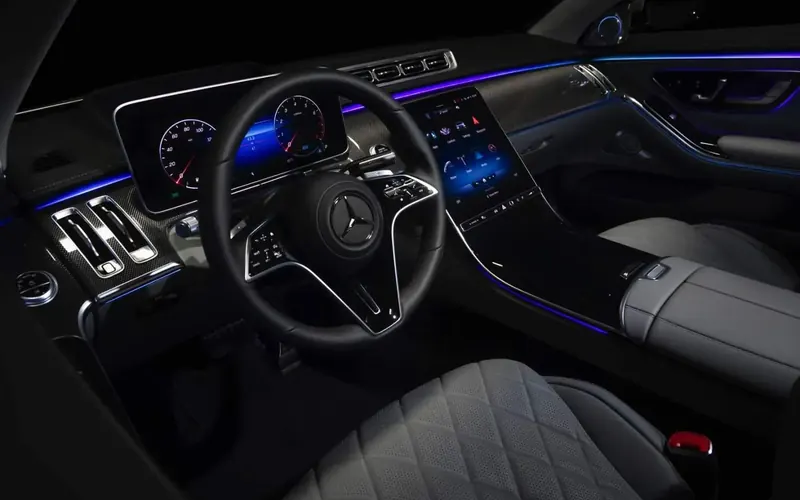
Good wedding car photo poses start with the car you actually have, not the one in your inspiration folder. Whether it is a stretch limousine, an SUV, a Sprinter van or a borrowed classic, the same handful of poses works with any wedding car, and the best images come from planning them before the day rather than improvising curbside. Below are poses your photographer can set up quickly, plus the timing and logistics that make them possible.
This post covers poses for arrivals, the ride itself, the wedding party and the exit, along with light, location and timing notes for Washington DC, Northern Virginia and Maryland. It also explains what to tell your photographer and chauffeur ahead of time, how to build a short shot list that fits your run sheet, and where the car fits into the wider plan. For exit-specific ideas, our guide to 25 wedding getaway car ideas for an unforgettable exit is a good next read.
Key takeaways
- Plan four to six car poses you actually want; a long list eats the timeline.
- Shoot the car in open shade or late-day light, not harsh midday sun.
- Give the chauffeur the shot list so doors, signs and décor are ready.
- Confirm any classic or vintage car separately; availability is on request.
- Build photo time into the run sheet so poses never delay the ceremony.
Why wedding car photo poses work with almost any vehicle
The car is a prop, not the subject. What makes a wedding car photo land is the moment inside it: a hand on the door, a first look at the venue through the window, a parent straightening a tie before stepping out. Those gestures read the same whether the vehicle is a sedan or a party bus, which means you can plan your poses before you know the exact car on your quote.
Your wedding fleet runs from a luxury sedan for parents and grandparents up to a party bus for the whole group, with stretch limousines, an Escalade limo, an SUV stretch and a Sprinter van in between. Each one changes the frame, not the idea. A sedan gives you tight, quiet portraits; a bus gives you room for the whole wedding party and a wider scene. Rolls-Royce, Bentley, vintage and classic cars are not on our fleet list, and availability for those is confirmed on request, but the poses below still apply.
This matters because couples often build a shot list around a specific car they saw somewhere and then have to rebuild it when the booking changes. Start with the poses and let the vehicle fill in the details. Tell your photographer roughly how many people will be in and around the car, and they can choose angles and lenses that suit it.
One practical note: the poses that photograph best are short. Most take under a minute once the car is parked and the light is right. That is why the planning conversation belongs in the weeks before the wedding, not in the ten minutes between the ceremony and the reception run.
Poses for the arrival
Arrival poses happen fast, so decide in advance which two or three you want and let the chauffeur know where to stop and how long to hold. A written run sheet with the arrival time and a named contact keeps everyone working from the same plan.
The door-open moment
Your photographer positions so the open door frames you, with the interior visible behind. The chauffeur opens the door and steps back out of frame. Shoot from slightly below the roofline so the door, the dress and the venue entrance all sit in one frame. Give this one fifteen seconds and move on.
The first step out
One foot on the pavement, hand on the door or on a helper's arm, eyes down or toward the entrance. It reads as composure rather than performance. Ask your photographer to shoot from the side so the dress and the car's profile both show, and have someone ready to gather the train before you stand.
The look back
A few steps from the car, you turn and look back at it, or at your partner still inside. This pose works with any vehicle because the car becomes background rather than subject. It is especially good at a church or hotel entrance where the doorway and the car sit in the same view.
The parents' arrival
Parents and grandparents often arrive in a luxury sedan or SUV, which gives you a quieter frame: the door opening, a hand on an arm, a brief embrace on the curb. Ask your photographer to catch this before the couple arrives, since it is easy to miss once the ceremony momentum starts.
The greeting at the curb
If you want a receiving-line feel, have the couple meet parents or the wedding party at the car rather than at the door. The car anchors the frame and gives everyone a natural place to stand. Keep the group to four or five people so the image stays readable.
The venue in the background
Turn the car so a landmark, church facade or hotel entrance sits behind you. In DC that might be a Capitol Hill street or a Georgetown doorway. Check with your photographer and the venue about where a vehicle can legally stop, and confirm parking and stopping rules with the venue and the local authority rather than assuming.
Poses inside and around the car
Once you are seated, the car becomes a small studio. These work in limousines, Sprinters and party buses, and most adapt to a sedan with a little adjusting. Keep the engine off and the doors open for light where the setting allows.
- Seated portrait through the open door: you and your partner on the seat, feet still outside, shot from a low angle so the door frame surrounds you.
- Through-the-window frame: photographer outside, you inside, glass between you. Works best with clean glass and soft light, and reads well in black and white.
- The reach across the seat: one hand finding the other's, shot close. Simple, quiet, and it fits any vehicle's interior.
- Standing room in a Sprinter or party bus: you standing in the aisle with the group seated behind. The Sprinter limo van gives easy entry in a gown and standing headroom.
- The toast inside: glasses raised, shot wide enough to include the interior. Alcohol only for guests 21 and older and only where the vehicle and DC, Virginia or Maryland law allow it; the policy is written on your quote.
- Looking out the window: you in profile, the city or countryside passing outside. Best on a slow stretch of road, not a highway merge.
- The group around the open tailgate or rear doors: the party arranged in a loose arc, car behind. Good for a party bus or SUV stretch with a large group.
- The chauffeur in the frame: a hand on the door or a brief exchange at the curb, shot from behind. Ask first, and keep it candid rather than posed.
Poses for the wedding party
Large groups need a shape, not a crowd. With an SUV stretch limo or a party bus, use the vehicle as the spine of the photo: the party lined along its length, seated on the bumper or step, or arranged in two rows with the taller people at the back. An SUV stretch limo seats up to 14 to 20 and a wedding party bus up to 20 to 40, so you can usually fit everyone in one frame without stacking people awkwardly.
Give the group one instruction and let them fill it in. Something like everyone looking at the couple, or everyone walking toward the camera, produces better images than a countdown and a posed smile. Bouquets raised, jackets open, a line of hands on the car roof: these read as energy rather than a lineup. Shoot the formal version first, then the loose one, and let the photographer call the order.
Keep the party moving. A group of twenty loses focus in about five minutes, so plan two or three setups and no more at each stop. If the party is traveling separately from the couple, arrange the meet-up point in advance and put it on the run sheet. Our bridal party transportation page covers how the group's ride fits around the couple's schedule.
For a big party, the best frames often come at the venue rather than at the curb: the group stepping off the bus together, or gathered at the entrance with the vehicle behind. Confirm with the venue where a large vehicle can stop and how long it can stay, and build that pause into the timeline rather than hoping for it.
Exit and getaway poses
The send-off frame is the one most couples picture: guests lined up on both sides, the two of you moving toward the open door. Ask your photographer to shoot it from behind the crowd first, then from ahead of you, so you get both the faces and your own expressions. Have the chauffeur hold the door open and stand to one side rather than in the frame. If your exit includes sparklers or ribbon wands, agree on the moment everyone is lit and ready before you step out.
The sign shot is a quick setup that works with any car. If you booked a "Just Married" sign or similar touch, it will be written on your quote, so confirm ahead of time that it will be mounted and visible from the angle your photographer wants. A clean side-on shot with the sign in frame and the two of you beside the rear door takes under a minute. For wording and placement, see our ideas for "Just Married" signs for your wedding car.
The last look is the quietest frame of the night. Once you are both in the car, ask the photographer to shoot through the open door or the window as you turn to each other before it closes. Keep the interior light on if the car has one, and let the chauffeur know this is coming so the door stays open a beat longer.
Matching the pose to the vehicle
The pose should follow the shape of the car. A long stretch limousine gives you a clean line for walking shots and a wide door for the send-off frame, while a Sprinter van with standing room lets you shoot inside without folding anyone in half. Tall SUVs and party buses sit higher, so seated group shots work better than leaning ones.
Use the table below as a starting point when you talk to your photographer. The exact vehicle is confirmed on your written quote, so check it before you finalize the shot list. Our wedding fleet page lists the typical seat ranges for each type.
| Vehicle | Typical seats | Poses that work well |
|---|---|---|
| Stretch Limousine | Up to 8–10 guests | Last look through the open door, walking shot along the length of the car, couple beside the rear door |
| Escalade Limo | Up to 12–14 guests | Seated group shot inside, send-off frame at the open door, sign shot at the rear |
| SUV Stretch Limo | Up to 14–20 guests | Full wedding party lined up along the car, group shot at the open door |
| Sprinter Limo Van | Up to 10–14 guests | Interior shots with standing room, easy entry frames in a gown, candid boarding shots |
| Wedding Party Bus | Up to 20–40 guests | Wide group shot beside the bus, window frames from outside, boarding candids |
| Shuttle Bus & Mini Coach | Up to 25–56 guests | Guest send-off line, wide arrival frame, candid loading shots |
| Luxury Sedan & SUV | Up to 3–6 guests | Parents and grandparents portraits, quiet last look, arrival at the curb |
Light, location and timing in DC, Virginia and Maryland
Shade is your friend for car portraits. Midday sun on a dark car throws hard reflections and makes everyone squint, so look for the shaded side of a hotel entrance, a tree-lined street or the north face of a building. In DC, the blocks around Capitol Hill and Dupont Circle offer both shade and clean backdrops within a short drive of most venues. If your schedule puts car photos at midday, ask your photographer to scout a shaded spot on the route.
Golden hour is short and worth protecting. In Northern Virginia, venues in Arlington, Alexandria and McLean are close enough to the Potomac for river light, while Loudoun County settings around Leesburg and Middleburg give you open sky and long views. Build ten to fifteen minutes into the run sheet for car photos at that hour and tell your chauffeur where the stop is. Confirm any parking or photography rules with the site or local authority before the day.
Curb space is the practical limit in the District. Hotel entrances, churches and venues near the National Mall and The Wharf often have narrow loading zones, so a car may need to hold a block away and pull in when you are ready. Landmark backdrops look best when the car is stationary and the frame is composed, not grabbed in traffic. For any stop on public land, check permits and hours with the managing agency in advance.
Planning the car and the shot list together
Every quote we write is itemized before booking, covering the vehicle, hours, gratuity, tolls, parking, any décor requests and the deposit and cancellation terms. That document is also where photo stops belong. If you want fifteen minutes at a landmark or a shaded side street, say so before you book so the hours and route reflect it. Nothing is booked until you accept the written quote, which gives you time to compare it against your photographer's timeline.
Once you book, every wedding gets one written run sheet shared with you or your planner. Add the car photos to it: where each pose happens, roughly when, and who is needed in frame. On the day, the chauffeur stays in touch with your planner or a named contact, so a photographer who wants the car repositioned can ask through that person.
Tell your photographer which vehicle is confirmed and share the run sheet a week or two ahead. That is also the moment to confirm any red carpet, sign or other touches, since these are arranged when booked and written on the quote. When you are ready to plan the car around your shot list, request a free wedding quote and we will put the details in writing.