Transportation for elderly and disabled wedding guests is often the part of a wedding plan that gets decided last, usually after the couple has already sorted the bridal party cars. That is a mistake worth avoiding, because the guests who need the most help are the ones who need the plan settled early. A little structure now saves a lot of worry on the day.
This post covers what to think through for older guests and guests with mobility needs: the vehicles that are easiest to get in and out of, how to time pickups around a ceremony, where drop-offs actually happen at DC-area venues, and how to put the plan in writing so nobody is guessing. If you are still deciding whether guest transport is needed at all, start with our guide to whether you need to provide transportation for wedding guests.
Key takeaways
- Ask guests about mobility needs early, on the RSVP, so the vehicle plan matches real needs.
- Sedans and SUVs suit parents and grandparents; vans and minibuses suit groups with walkers.
- Curbside drop-off and pickup points matter more than the car itself at many DC venues.
- Build extra time into the run sheet for slower boarding and unloading.
- Put the plan in writing and share it with the planner or a named family contact.
Start With the Guest List, Not the Vehicles
Before you look at a single vehicle, sit down with the guest list and mark the people you already know will need help. That means grandparents, anyone using a cane, walker or wheelchair, guests recovering from surgery, and relatives who tire easily on stairs or long walks. A short, plain question on the RSVP, such as whether anyone in the party has mobility needs you should plan for, tells you far more than guessing.
Stamina matters as much as mobility. A guest who walks fine across a flat room may still struggle with a long hotel corridor, a flight of church steps or standing through a receiving line. Ask whether anyone would prefer to be dropped closer to the door, or needs a seat and a quieter arrival. Those answers decide how many vehicles you need and how the day is timed.
Once you know who needs what, the rest of the plan falls into place. A handful of older guests may only need a sedan for the parents and grandparents, while a larger group with walkers and wheelchairs may point to a shuttle with room to spread out. Write the names down next to the need, share the list with your planner, and treat it as a living document that can change as replies come in.
Which Vehicles Work Best for Guests With Limited Mobility
The right vehicle comes down to two things: how many people are riding and how much help each one needs getting in. A sedan or SUV suits parents and grandparents who want a quiet, direct ride, while a van or shuttle gives more room to move and easier steps for guests with walkers.
Seat counts below are typical ranges, and the exact vehicle is confirmed on your written quote. If you are moving a group between a hotel and a venue, a wedding guest shuttle is usually the simplest way to keep everyone together and let guests board at their own pace.
| Vehicle | Typical seats | Best for |
|---|---|---|
| Luxury Sedan & SUV | Up to 3–6 guests | Parents, grandparents and one or two VIP guests who want a direct, quiet ride |
| Stretch Limousine | Up to 8–10 guests | The couple or a small group, though the step up can be high for some guests |
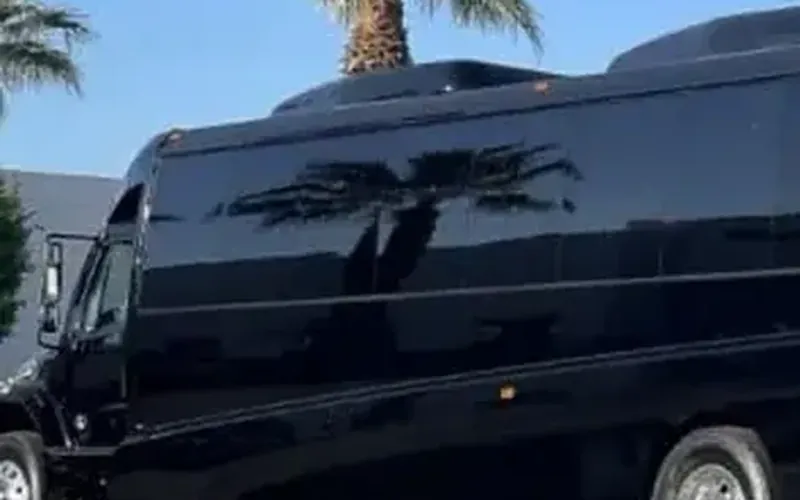
| Sprinter Limo Van | Up to 10–14 guests | Guests in gowns or with walkers who want standing room and easier entry |
| Escalade Limo | Up to 12–14 guests | A mid-size group that wants limo style with a little more space |
| SUV Stretch Limo | Up to 14–20 guests | The wedding party traveling together in one vehicle |
| Wedding Party Bus | Up to 20–40 guests | Large groups and the reception run, with room to move around |
| Shuttle Bus & Mini Coach | Up to 25–56 guests | Guest shuttles between hotel and venue, with the most space and the easiest boarding |
Getting In and Out: The Part Guests Actually Notice
Guests rarely remember which car they rode in, but they always remember whether climbing into it was hard. Step height is the first thing to check. A stretch limousine sits high off the ground and can be awkward for someone with a bad knee, while a sedan or a van with a lower, wider entry is often kinder. Ask about the step before you book, not on the day.
Standing room changes everything for anyone in a long gown or a stiff outfit. A van or shuttle lets a guest step up, straighten out and sit down without ducking or twisting. If the guest uses a walker or cane, the space to fold it and set it aside matters too, and so does having a grab handle within reach.
Think about the whole sequence, not just the door. A guest has to walk from the building to the curb, wait, step up, settle in, then do it again at the other end. Choosing a vehicle with easy entry cuts two of those moments down. It also helps to have a family member or attendant nearby who knows the plan and can offer an arm without being asked.
Drop-Offs at DC, Virginia and Maryland Venues
Where a car can actually stop is often the hardest part of a DC wedding plan. Capitol Hill churches sit tight against the sidewalk, and a limousine may have to let guests out a short walk from the door. Hotels along Connecticut Avenue or in Dupont Circle usually have a covered entrance, but the drive can be busy, so the drop-off needs to be timed rather than improvised.
In Virginia and Maryland the picture changes with the property. Old Town Alexandria has brick sidewalks and narrow streets near the water, and a larger vehicle may need to stop around the corner. Wine country venues in Loudoun County often end in a gravel or unpaved drive, so a shuttle that can handle the surface is worth asking about. Waterfront spots at National Harbor and The Wharf have their own traffic patterns on weekend evenings.
None of this is a reason to worry, but it is a reason to plan the drop-off in advance. Ask the venue where cars are allowed to stop, whether there is a covered or level entrance, and how far a guest would walk from curb to door. Then put that detail on the run sheet so the chauffeur and the planner are working from the same information.
Planning Transportation for Elderly and Disabled Wedding Guests Around the Whole Day
A ride to the ceremony is only one piece of the day. The same guest may need to get from the hotel to the church, from the church to the reception, and home again, and each leg has its own timing. Map the day in order and note where the long waits and the walking happen, because those are the moments that wear people out.
If you are still deciding how much transport to provide at all, our guide to whether you need to provide transportation for wedding guests walks through the options. For guests with mobility needs, the answer is usually a smaller, dedicated vehicle rather than a seat on the big shuttle, so they are not waiting for a full bus to load before they can sit down.
Build in slack. A guest who moves slowly needs a few extra minutes at each end, and a schedule that assumes everyone boards in seconds will fall apart quietly. Give the vehicle a buffer, tell the guest or their family member when it will arrive, and make sure someone on the ground knows which door they are using.
Late night deserves its own thought. Tired guests, dark parking lots and a long walk back to the hotel are a poor combination, so plan the last ride before the dancing starts rather than after. Our post on getting guests home safely from late-night shuttles covers the timing questions in more detail.
What to Put on the Run Sheet and Quote
Every wedding we handle gets one written run sheet, shared with the couple or their planner, and the chauffeur stays in touch with the planner or a named contact on the day. For guests with mobility needs, that sheet should name the guest, the pickup point, the drop-off door and any equipment they are bringing. A note that reads "Grandma, side entrance, walker" is worth more than a paragraph of general instructions.
Your quote is written and itemized before anything is booked, covering vehicles, hours, gratuity, tolls, parking, décor requests, deposit and cancellation terms. If you want a red carpet, a "Just Married" sign or another touch, it is arranged when booked and written on the quote. Nothing is booked until you accept it, which gives you time to check the details against your guest list.
Alcohol is only for guests 21 and older, and only where the vehicle and DC, Virginia or Maryland law allow it; the policy is written on your quote. If a guest with mobility needs is also managing medication or a restricted diet, keep that with the family member rather than the chauffeur. The run sheet is for logistics, not medical instructions.
Tell guests what to expect before the day. A short note on your wedding website explaining where the accessible vehicle picks up, who to ask for and what time it leaves saves a dozen phone calls. Our wording examples for telling guests about transportation can be adapted in a few minutes.
Questions to Ask Before You Book
Ask about step height and door width for every vehicle you are considering, and say plainly who will be riding. A company that has done this before will ask you the same questions back. If a guest uses a wheelchair, describe it, since folding chairs and power chairs need very different space.
Ask how the chauffeur will know where to stop and who will meet the guest at the door, and what happens if the schedule slips. These are ordinary planning questions, and the answers should end up on the run sheet rather than in a conversation nobody wrote down.
Ask about the venue's drop-off rules directly, since the venue controls its own driveway and curb. Confirm any permits or street closures with the city or county that issues them, and check hours and access rules with the venue itself. We can plan around what you learn, but the official source is the one to trust.
When you are ready, request a free wedding quote and include the guests who need extra help along with their pickup points. The more we know about the people riding, the better the vehicle and timing fit. You can also look through our wedding fleet to see the typical seat ranges before we talk.
A Note on Cars We Do Not List
Rolls-Royce, Bentley, vintage, classic and electric cars are not part of our listed fleet, and we will not pretend otherwise. Couples sometimes ask for them for a parent or a grandparent, and that is a reasonable request. Availability for those cars is confirmed on request, so raise it early if it matters to you.
If a specific car is the priority, treat it as a separate item from the guest shuttle and plan both. The shuttle does the practical work of moving people with walkers and tired feet, while a special car handles one arrival. Keeping the two jobs apart usually makes the day calmer for everyone.
Telling Guests and Helpers What to Expect
- Clear wording does more for an older or disabled guest than any single vehicle feature. Tell guests what kind of vehicle will collect them, roughly when, and where the pickup point sits relative to the hotel entrance or the ceremony door. Our guide to how to tell guests about wedding transportation includes wording you can adapt, and it is worth adding a line inviting anyone with mobility needs to reply so you can plan around them.
- Name a helper for each step of the day rather than leaving it to the crowd. A grandchild who walks a grandmother from her room to the lobby, a friend who meets guests at the ceremony door, a family member who knows where the accessible entrance is: these small roles remove most of the confusion. Put their names and phone numbers on the run sheet so the chauffeur and your planner know who to look for.
- Signage matters more than most couples expect. Large-print cards in the hotel lobby and at the reception exit, with the pickup time and a simple description of the vehicle, help guests who cannot read a small program or hear an announcement. Our shuttle schedule and signage templates give you a starting point, and a printed copy in each guest's welcome bag is a kind touch.
- Late in the evening, the same care applies in reverse. Guests who tire early may want to leave before the shuttle's first run, and guests who use mobility aids need a vehicle that can take them without a long wait at the curb. Our post on getting guests home safely from late-night wedding shuttles covers the timing, and a named contact at the exit makes the last hour calmer.
Planning the Transportation for Your Own Wedding
- Start with a list of who is coming and what each person needs, then match vehicles to that list. Parents and grandparents often travel best in a luxury sedan or SUV that pulls up close to the door, while a Sprinter limo van gives a larger group standing room and an easier step up in a gown or with a cane. If your guest list is big enough to need a coach, the shuttle bus and mini coach page shows the seating ranges we work with.
- Ask about the practical details before you book: step height, handholds, floor space for a walker or folding wheelchair, and how close the vehicle can park to each entrance. Some historic churches and older hotels in DC, Virginia and Maryland have narrow doorways or limited curb space, so it helps to describe the venue when you request a quote. Availability of any specialty car, including vintage, classic, Rolls-Royce, Bentley or electric models, is confirmed on request rather than assumed.
- Write the plan down and share it. Every wedding we handle gets one written run sheet, and for a wedding with older or disabled guests that sheet should also list who is helping whom, which entrance each vehicle uses, and the phone numbers for your planner or named contact. Our wedding day coordination service can hold those threads if you would rather not manage them yourself.
- When you are ready to talk through vehicles and timing, request a free wedding quote. We write every quote in itemized form, covering vehicles, hours, gratuity, tolls, parking, décor requests and deposit and cancellation terms, and nothing is booked until you accept it. Tell us about mobility needs, guest counts and the venues on your list, and we will suggest a combination that keeps every guest comfortable from the first pickup to the last ride home.