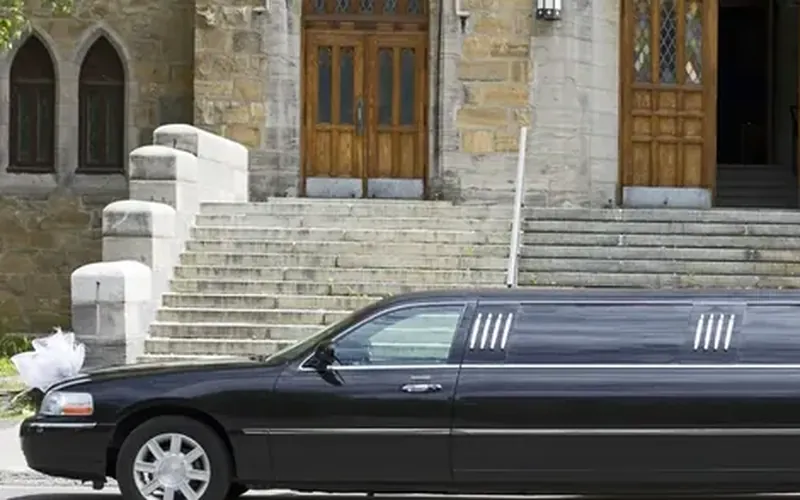
Is wedding transportation worth it? For most Washington DC couples, yes, but not always in the form they first imagine. A car and driver solve specific problems: the wedding party arriving together, parents and grandparents getting to the church without circling for parking, and guests moving between a hotel and a venue across the region. The question is which parts of your day need it, and which parts don't.
This post walks through the honest case for and against booking wedding transportation, the alternatives couples consider instead, and how to decide for your own wedding. It covers what a car actually fixes, where the money goes, when a simpler plan works better, and how to plan the pieces you keep. The broader context lives in our complete guide to wedding transportation in Washington DC, and this post is the decision underneath it.
Key takeaways
- Transportation earns its cost when parking, timing or distance would otherwise land on your family and wedding party.
- A single car for the couple and a guest shuttle solve different problems; most weddings need one more than the other.
- Alternatives like a friend driving or one shared ride can work for small weddings but shift risk onto your guests.
- Written quotes and one run sheet make the cost and the plan visible before you commit.
- Decide by the hour of your day that worries you most, not by what other weddings book.
What wedding transportation actually solves
Parking is the first problem a car and driver remove. DC churches often sit on tight residential blocks, and venues in Georgetown, Capitol Hill and around The Wharf have little or no lot space. When a car drops the wedding party at the door and parks elsewhere, nobody circles the block in a gown or walks three streets in heels. That single change settles a lot of morning stress.
The second problem is keeping the wedding party together. A group of eight or twelve people leaving one hotel for photos, then a church, then a reception across the river needs one vehicle and one plan, not a convoy of relatives following GPS. When the party travels as a unit, the photographer knows where everyone is and the ceremony start time stops depending on late stragglers.
The third is timing. A ceremony at a church in Alexandria and a reception in Loudoun County leaves a narrow window for photos and the drive, and guests who do not know the area will misjudge it. Transportation turns that window into a schedule you can write down and hand to your planner, rather than a hope that everyone leaves early enough.
The case for booking it
Couples book transportation for reasons that are practical more than romantic. Each one replaces a small risk with a written plan, and together they explain why most DC weddings include at least one vehicle and often a shuttle.
- Everyone arrives togetherThe wedding party travels in one vehicle, so photos, touch-ups and the walk to the ceremony stay on one schedule instead of several.
- A quiet moment for the two of youThe ride between ceremony and reception is often the first time you sit down alone all day.
- Out-of-town guests get a rideA wedding guest shuttle between hotel and venue means visitors do not need to learn DC roads or hunt for parking.
- The day stops depending on relativesNobody's uncle is driving the bride, and no parent is navigating an unfamiliar route in formal clothes.
- Parents and grandparents are looked afterA luxury sedan or SUV collects them at the door and returns them when they are ready to leave.
- The schedule holds across the regionA written run sheet covers the church-to-reception drive, the Beltway, the bridges and the photo stop.
- The day ends without a scrambleA getaway car is waiting at the end of the night, so no one is calling around for a ride.
- One contact owns the planYour chauffeur stays in touch with your planner or a named contact, so questions land in one place.
Is wedding transportation worth it? The case against, honestly
Cost is the honest objection. Transportation is a line item that buys time and coordination rather than anything guests will photograph, and it competes with the flowers, the band and the food. If the budget is tight, a single well-chosen vehicle for the couple can matter more than four cars nobody needed. Our post on the wedding transportation budget helps you weigh that trade-off.
Coordination is the second cost. A vehicle only helps if someone decides who rides in it, when it leaves and where it waits. That means a run sheet, a seating plan and a person on the day who answers the phone. Couples who would rather not manage any of that should either hand it to a planner or keep the plan small enough to hold in one hand.
Then there is idle time. A car booked for six hours may sit parked for two of them during the ceremony and cocktail hour, and you pay for that window whether or not anyone is inside. A good quote shows the hours clearly so you can see where the slack is, and a shorter booking or a shuttle on a loop can sometimes do the same job for less.
What each part of the day costs you in effort
Before you decide, look at what each piece of the day asks of you if you skip the vehicle. The table compares the four common pieces by who they serve and what they replace, so you can see where the effort actually lands.
| Piece of the day | Who it serves | What it replaces | Effort if you skip it |
|---|---|---|---|
| Couple's car | The two of you, from first look to getaway | A relative driving, or parking and walking in formal clothes | High on the wedding day itself |
| Wedding party transport | Bridesmaids, groomsmen, the full party | A convoy of separate cars following each other | High for whoever coordinates the group |
| Parent and VIP cars | Parents, grandparents, close family | Guests navigating unfamiliar streets and parking | Moderate, but it surfaces at the worst moment |
| Guest shuttle | Out-of-town and local guests | Guests driving between hotel and venue | High for planners and family contacts |
| Photo tour vehicle | Couple and photographer | Reparking between photo stops around the city | Moderate, and it eats into photo time |
| Rehearsal dinner transport | Wedding party and family the night before | Guests finding their own way across the region | Low to moderate, depending on distance |
Alternatives couples consider instead
Before you book anything, it helps to see the alternatives clearly. Most couples weigh a few familiar options, and each one has a point where it starts to strain. Knowing that point in advance makes the decision easier.
- A friend or family member drives the coupleIt saves money, but it puts a guest behind the wheel on a day they should be enjoying, and they may not know the venue entrances or the route.
- One shared ride for the wedding partyA single large vehicle can work for a small party, but it often means waiting for everyone to finish photos or hair and makeup before anyone can leave.
- Parents and grandparents drive themselvesThis works when parking is easy and the venue is close, but in DC and Old Town Alexandria parking near churches and hotels is rarely simple, and older guests may not want to navigate it.
- Guests arrange their own ridesFor a hotel wedding with everything on site, this can be fine. It strains when the ceremony and reception are in different places or when guests are visiting from out of town.
- A rideshare for the couple at the end of the nightIt is easy to book, but availability after a reception can be unpredictable, and a shared car is not the quiet exit some couples want.
- A borrowed or family classic carIt is a nice gesture, but it comes with its own logistics: who drives it, where it parks, and how it gets home if the couple leaves by another route.
- No formal transportation at allThis is a real option for small, walkable weddings. It stops working when the day involves multiple locations or a tight timeline between ceremony and reception.
When a simpler plan is the right call
Not every wedding needs a full transportation plan. If your ceremony and reception are at the same venue, most guests are staying nearby, and the wedding party is small, you may not need more than a car for the couple at the end of the night. A single vehicle can also be enough when the only real need is getting the couple from the hotel to the ceremony and back without fuss.
A photo tour is another case where less can be more. Some couples book one vehicle for a couple of hours to move between a few well-known DC backdrops, then return to the venue. That works well when the photo locations are close together and the schedule is realistic. If you are considering this, our wedding photo tour transportation page explains how the timing usually works.
There are also weddings where no formal transportation is the right answer. A small ceremony at a neighborhood church with a reception a short walk away, or a courthouse wedding with lunch afterward, may not need a car and driver. If you are planning something that small, our elopement and courthouse wedding car page covers the cases where a single car still helps and where it does not.
How to plan the transportation you do keep
Once you decide which rides matter, the rest is a sequence. You do not need to solve everything at once. Work through these steps in order, and the plan will come together without last-minute surprises.
- Decide which rides are non-negotiableStart with the couple, the wedding party, and any guests who cannot easily drive or park. Everything else is optional.
- Get a written, itemized quoteAsk for vehicles, hours, gratuity, tolls, parking, décor requests, deposit, and cancellation terms in writing. Nothing should be booked until you accept it.
- Confirm the run sheetEvery wedding should have one written run sheet shared with you or your planner. It lists pickup times, addresses, and who is in which vehicle.
- Name a day-of contactChoose one person, often your planner or a family member, who will be reachable by the chauffeur on the day. This keeps questions from landing on you.
- Review the alcohol policyIf your vehicle allows alcohol, confirm the rules for guests 21 and older and the local laws that apply. The policy should be on your quote.
- Check the vehicle against your groupMake sure the seat range fits your party and that older guests can get in and out comfortably. The exact vehicle is confirmed on the quote.
Deciding, then getting a written quote
The decision comes down to a few honest questions. Does your day involve more than one location? Are there guests or family members who will struggle with parking or directions? Do you want the wedding party to arrive together, or is a looser plan fine? If you answer yes to two or three of these, transportation is likely worth it in some form.
It also helps to separate the must-haves from the nice-to-haves. A car for the couple and a shuttle for guests between a hotel and venue are often the core. A party bus for the whole wedding party or a vintage car for photos may be additions you book only if the budget allows. Our wedding transportation services page shows how these pieces fit together.
When you are ready, ask for a written quote. We itemize every vehicle, hour, gratuity, toll, parking charge, décor request, deposit, and cancellation term before anything is booked. You will see exactly what you are paying for, and you can adjust before you commit. Request your free wedding quote and we will put the numbers in writing.