Planning an LGBTQ+ wedding in Washington DC starts with the same questions every couple faces: where you will marry, who will officiate, how your families will get there, and how the day will run. The difference is that you get to decide what your wedding looks like without defaulting to anyone else's script. This guide covers the local pieces that matter most.
We will walk through venues and neighborhoods that suit different sizes and moods, how to think about officiants and paperwork in DC, Maryland and Virginia, and how to handle family and guest logistics with care. We will also cover the transportation questions that come up for every wedding, including the ones that are specific to yours, so you can build a day that feels like the two of you.
Key takeaways
- DC, Maryland and Virginia each handle marriage paperwork differently, so confirm the process with the official source.
- Choose a venue and neighborhood that match the size, mood and accessibility needs of your guest list.
- Ask potential officiants how they handle same-sex ceremonies and what they need from you in advance.
- Plan transportation around who is getting ready where, including family members who may need extra care.
- A written run sheet shared with your planner keeps the day moving without relying on memory.
What makes an LGBTQ+ wedding in DC its own kind of planning
Marriage for same-sex couples is recognized in DC, Maryland and Virginia, so the legal basics are settled and the real work is the choices: who stands with you, what the ceremony sounds like, and whose traditions you keep. That freedom is the point, and it is also where couples can feel stuck, because nothing is assumed for you. Treat the planning as a series of decisions rather than a template you have to fill in.
Every cultural and themed wedding follows the same logic. A couple planning an Indian wedding spends months deciding how the baraat will run and who travels in which car, and the planning is easier once those choices are written down. Our guide to an Indian wedding baraat in DC shows how one tradition turns into a set of practical transport questions. Your wedding deserves the same level of specificity.
The local advantage is that Washington is a city of neighborhoods, each with its own scale and feel, and the surrounding counties give you room to spread out. That means you can usually find a venue that matches the wedding you actually want rather than the one a venue package expects. Start with the shape of the day, then let the place and the logistics follow. When you are ready to talk vehicles, our wedding limo service in Washington DC can walk through the options with you.
Choosing a venue and neighborhood that fit your wedding
In DC, the well-known options run from Capitol Hill, with its historic row houses and proximity to the Library of Congress and the Supreme Court, to Georgetown's older streets and gardens along the Potomac. Navy Yard and The Wharf offer newer waterfront spaces with river views and easy access from downtown hotels. Each area has a different feel on the day, and each brings its own parking and drop-off realities that are worth checking before you commit.
Beyond the District, Maryland and Virginia widen the choices. Old Town Alexandria has cobblestone blocks and waterfront settings, while Loudoun County and Virginia wine country suit couples who want a rural backdrop and a weekend of events. Bethesda, Chevy Chase and Potomac sit close to DC with suburban ease, and Annapolis brings a waterfront and a historic core of its own. Our wedding venues we serve page lists the areas we know well.
Size and accessibility should drive the shortlist as much as style. Ask how many guests the room truly holds, whether there is step-free entry and accessible restrooms, and where vehicles can pull up without blocking traffic. Ask whether the site has a preferred arrival point for shuttles and whether a backup indoor space exists. A venue that answers these questions early will make the rest of your planning calmer.
Officiants, paperwork and the legal side in DC, Maryland and Virginia
DC, Maryland and Virginia each set their own rules for marriage licenses, waiting periods and who may officiate, and those rules can differ from what a friend told you. Confirm the current requirements with the official source in the jurisdiction where you will marry, and do it early enough to book an officiant who fits your ceremony. The notes below are a starting checklist, not legal advice.
- Where you marry mattersThe license generally comes from the jurisdiction where the ceremony takes place, so decide the location first.
- TimingEach jurisdiction has its own process and timing for applying for and receiving a license, so confirm before you set the date.
- Officiant rulesWho may legally solemnize a wedding varies by jurisdiction, so check your chosen officiant against the official rules.
- DocumentsBring the identification and paperwork the issuing office requires, and check whether either of you needs anything extra.
- Name changes and recordsAsk the office how to obtain certified copies afterward, since you may need several for name changes.
- Ceremony wordingA legal ceremony may require certain elements, so review the required language with your officiant in advance.
- If you marry outside DCConfirm the rules for that state or country separately, including any documents you must bring from home.
Talking with family and guests about your wedding
Invitations set expectations, so be clear and warm about what the day will include. Name the events, note who is invited to each, and say plainly how you would like to be introduced and addressed if that matters to you. A short line on your wedding website about the ceremony and the reception can answer questions before anyone has to ask them.
Seating deserves thought when families are blended, estranged or still adjusting. Put people next to others you know they will enjoy rather than grouping by obligation, and give a trusted friend or relative the job of watching for anyone who seems left out. If a relative has questions or concerns, a calm conversation well before the wedding usually goes further than a debate at the reception.
Some guests will need more information than others: where to stay, how to get from the hotel to the venue, and what the day will feel like. Share a simple schedule and a contact for the day, and let your planner or a named family member field questions so you are not answering texts while getting ready. Our wedding transportation page is a useful link to send anyone who asks how they will get around.
Matching the wedding party and family to the right vehicles
Most couples need more than one vehicle because different groups leave from different places at different times. Think in terms of who travels together, not who is most important. The wedding fleet covers everything from a sedan for two to a coach for a full guest list, and the exact vehicle is always confirmed in writing before you book.
Start with the couple, then work outward to the wedding party, parents and any guests who need a ride. If your party is mixed in gender or size, or if people are spread across several hotels, a larger single vehicle often costs less hassle than several small ones. A multi-vehicle plan is common when the getting-ready locations are far apart.
| Group | Good fit | Typical seats |
|---|---|---|
| The couple, or the couple plus one or two others | Stretch Limousine | Up to 8–10 guests |
| Couple who want limo style with a little more room | Escalade Limo | Up to 12–14 guests |
| Whole wedding party traveling together | SUV Stretch Limo | Up to 14–20 guests |
| Party where gowns and easy entry matter | Sprinter Limo Van | Up to 10–14 guests |
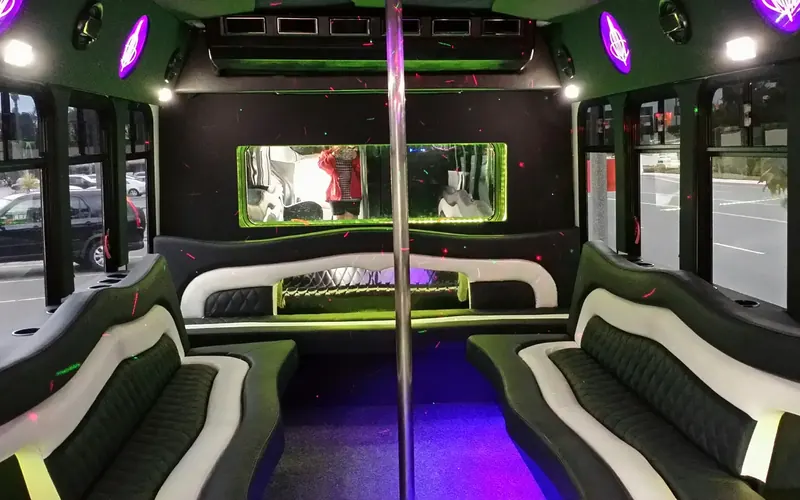
| Large party, photo stops and the reception run | Wedding Party Bus | Up to 20–40 guests |
| Parents, grandparents and VIP guests | Luxury Sedan & SUV | Up to 3–6 guests |
| Guests moving between hotel and venue | Shuttle Bus & Mini Coach | Up to 25–56 guests |
Getting ready, photos and the ceremony run
A workable morning keeps the two of you apart until the ceremony, then brings everyone together in a set order. The sequence below is a sample, not a rule. Your planner or named contact can shift it once the venue, photographer and ceremony time are locked, and the chauffeur stays in touch with that person through the day.
- Separate pickupsEach side is collected from its own getting-ready location, whether that is a hotel, a home or an apartment, with the wedding party riding together.
- Parents and grandparentsA sedan or SUV collects family who are not traveling with the wedding party and brings them to the ceremony ahead of the couple.
- Photo tourIf you want portraits before the ceremony, the photo tour covers the landmarks and neighborhoods you have chosen, with time built in for walking between stops.
- Arrival at the ceremonyThe couple arrives separately or together, depending on what you have decided, and the party is dropped close to the entrance where the venue allows it.
- Ceremony to receptionAfter the ceremony, the party travels to the reception or to a second photo location, and guests follow by shuttle or their own cars.
- Quiet momentBuild in a short buffer between the ceremony and the reception so the two of you can breathe before the room fills up.
Guest shuttles, accessibility and the trip home
If your ceremony and reception are in different places, or your guests are staying in a hotel away from the venue, a hotel to venue shuttle keeps the day moving. One coach making two or three trips is often simpler than asking guests to find parking in a neighborhood they do not know. Share the pickup point, the times and a contact number in advance, and ask the hotel to post the schedule at the front desk.
Accessibility deserves a real conversation rather than an assumption. Ask guests directly whether they need step-free access, extra time boarding or space for a wheelchair or mobility device, then match them to the right vehicle. A Sprinter van with standing room and easy entry suits many guests better than a low stretch limousine. Tell us what your guests need when you book so it is written on the quote and the run sheet.
The end of the night is its own plan. A getaway car waiting at a set time lets the two of you leave without hunting for a ride, and a second shuttle wave gets guests back to the hotel. Decide who is responsible for the final headcount and who tells the chauffeur when to leave. If your reception runs late, a written end time protects everyone from confusion.
Planning the transportation for your wedding day
Every quote we send is written and itemized before anything is booked. It lists the vehicles, the hours, gratuity, tolls, parking, any décor requests and the deposit and cancellation terms, so you can see exactly what you are agreeing to. Nothing is reserved until you accept the quote, which gives you and anyone helping you pay time to review it.
Once you book, your wedding gets one written run sheet shared with you or your planner. It sets out pickups, addresses, times and who is traveling in which vehicle, and on the day the chauffeur stays in touch with your planner or a named contact. If your plans change, the run sheet is the document that changes with them. You can read more about how we work on our about page.
Every wedding is different, and yours may include two ceremonies, a chosen name on the signage or a route that matters to your families. Tell us those details early and we will build them into the plan. When you are ready, get a free wedding quote and we will put the whole day in writing for you to review.