A Catholic wedding day timeline in DC churches runs on two clocks: the Mass and the city. The ceremony has its own fixed shape, and the drive between the church, the photo stop and the reception adds the rest. Build the schedule around both and the day feels calm rather than rushed.
This post walks through a realistic order of events for a full Catholic Mass, then shows where photos, family portraits and the reception fit around it. It covers the local details that catch couples out, from parish paperwork to DC traffic, and explains where transportation belongs on the schedule. At the end you will know what to confirm with your parish and what to put in writing with your planner and your driver.
Key takeaways
- Confirm the ceremony time, rehearsal slot and any parish paperwork directly with the church office early.
- Leave a buffer between the end of Mass and the start of the reception for receiving-line time, portraits and driving.
- Give every vehicle group its own pickup time and location on one written run sheet.
- Plan photo stops close to the church or the reception so the schedule does not depend on cross-city driving.
- Book transportation only after the ceremony time is fixed, and confirm the quote in writing before the day.
How a Catholic wedding day usually runs
A Catholic wedding day follows a shape that most parishes know well. The morning begins with getting ready at home or a hotel, often with hair and makeup for the couple and the wedding party. The church ceremony is the fixed point: a full Mass with the Liturgy of the Word, the exchange of vows and rings, and Communion. That takes longer than a civil ceremony or a short service, so the rest of the day is built around it.
After the Mass comes the receiving line, usually at the back of the church or outside on the steps. This is when the couple greets guests one by one, and it can take a while if the guest list is large. Then the wedding party and families move to photos, either at the church or at a nearby park or landmark. The reception follows, often starting with a cocktail hour while the couple finishes portraits.
Because the Mass is the anchor, the timeline has to account for its length and the formalities around it. A full Mass with music and a homily can run well over an hour, and the receiving line adds more. That leaves a smaller window for photos and the drive to the reception than many couples expect. Planning backward from the reception start time is the surest way to keep the day on track. If you are also planning a ceremony with a procession, our post on an Indian wedding baraat in DC shows how another tradition handles the same logistics.
A sample Catholic wedding day timeline DC couples can adapt
Here is a realistic order of events for an afternoon wedding with a full Mass. Adjust the times to your parish's schedule and your reception start, but keep the ceremony and the photo window as your anchors.
- Morning preparationThe couple and wedding party get ready at home or a hotel, with hair and makeup starting several hours before the ceremony. The goal is to be dressed and ready to leave with buffer time.
- Depart for the churchThe wedding party travels to the church, aiming to arrive at least 30 minutes before the ceremony. This allows time for final touches, a moment of quiet, and lining up for the processional.
- CeremonyThe full Mass begins on time and runs according to the parish's plan, typically including readings, the homily, vows, and Communion. Expect it to last longer than a civil ceremony.
- Receiving lineAfter the Mass, the couple greets guests at the back of the church or outside. This can take 20 to 40 minutes depending on the number of guests, so factor it into the schedule.
- Photo sessionThe wedding party and families move to a nearby location for portraits. Keep this window tight—45 to 60 minutes is common—and choose a spot close to the church to minimize driving.
- Reception arrivalThe couple and wedding party travel to the reception venue, aiming to arrive shortly before or during the cocktail hour. This gives guests time to settle in while the couple finishes photos.
- ReceptionThe reception begins with introductions, first dances, and dinner. The timeline from here is usually managed by the caterer or planner, but the transportation should be coordinated to match.
What the parish controls, not you
The parish sets the ceremony time, and that time is not flexible once booked. Many churches have fixed slots for weddings, often on Saturdays, and they may schedule other events around yours. The rehearsal date and time are also set by the parish, usually the evening before or a few days prior. Confirm these details early and put them in writing with your planner and your driver.
Paperwork deadlines are another parish matter. Most dioceses require couples to complete preparation courses and submit documents well before the wedding. The parish office will tell you what is needed and when. Do not assume you can handle it at the last minute; ask for the timeline in writing and keep copies.
Photography and decoration rules vary by church. Some allow photographers only in certain areas, or prohibit flash during the Mass. Flowers and decorations may need approval, and some parishes have policies about aisle runners, unity candles, and the use of the church before or after the ceremony. Ask the parish office for their guidelines and share them with your vendors so no one is caught off guard. Our church wedding transportation page covers how we build a run sheet around parish rules and fixed ceremony times.
Where the ceremony and reception sit on the map
In DC, many couples marry at a church in the city and hold the reception at a hotel or venue nearby. For example, a ceremony at a Capitol Hill church might pair with a reception at a venue on the waterfront, a short drive across town. But even a short distance can take longer than expected during rush hour or a weekend event. Check the traffic patterns for your date and add buffer time.
When the church is in Northern Virginia and the reception is in DC, or vice versa, you will cross a bridge. The Key Bridge, the Roosevelt Bridge, and the 14th Street Bridge are common routes, but each has its own traffic quirks. The George Washington Memorial Parkway can be scenic but slow, and the Beltway is unpredictable. Always plan for the bridge crossing to take longer than a map suggests.
Maryland couples often face similar choices. A church in Bethesda or Chevy Chase might pair with a reception in downtown DC, requiring a drive down Wisconsin Avenue or Connecticut Avenue. Alternatively, a ceremony in Annapolis might lead to a reception on the Eastern Shore, crossing the Bay Bridge. In every case, the drive time matters more than the distance on a map. Use a route planner at the same time of day as your wedding to get a realistic estimate.
Fitting photos and family portraits into the day
The first decision is whether you see each other before Mass. A first look at a garden, a hotel courtyard or a landmark near the church frees up the rest of the day, because portraits of the two of you are already done. Many couples prefer to keep that moment at the church door after the ceremony instead, which is traditional but leaves less room later. Decide before you book the church, since the answer changes your call time.
If you choose portraits after the ceremony, plan on the receiving line and family photos eating into the gap before the reception. Group shots go fastest when you hand the photographer a written list in advance, with names and groupings, and ask an usher or a planner to gather people by name. Each large group takes time to assemble, especially when guests are chatting on the church steps.
A short photo stop between the church and the reception works best when it sits close to your route. The monuments, the waterfront and the older residential blocks near many DC parishes all photograph well, but parking and crowds vary by day. A wedding photo tour built into the run sheet gives the driver a fixed window, so the stop stays short and the reception start holds.
If your families are traveling in from out of town, the morning often starts with a hotel pickup rather than a house. Our hotel to venue shuttle page explains how family pickups are scheduled around a ceremony time, which helps when grandparents need a slower start.
Vehicle groups and seat ranges
Most Catholic weddings move several groups on the same morning: the couple, the bridal party, parents and grandparents, and guests who need a ride from a hotel. Matching a vehicle to each group keeps the schedule simple and avoids squeezing people into the wrong car. The ranges below are typical, and the exact vehicle is confirmed on your written quote.
Think about the gown when you choose. A Sprinter van offers standing room and easier entry, while a stretch limousine suits a small group and a short run. If parents and grandparents travel separately, a sedan or SUV keeps them comfortable and out of the busy church driveway.
When several vehicles run at once, someone has to hold the plan together. A multi-vehicle wedding setup works best when one written schedule lists every pickup, and you can see the full range on our wedding fleet page.
| Group | Typical vehicle | Seat range |
|---|---|---|
| The couple | Stretch Limousine or Sprinter Limo Van | Up to 8–10, or 10–14 |
| Bridal party, smaller | Escalade Limo | Up to 12–14 |
| Whole bridal party in one car | SUV Stretch Limo | Up to 14–20 |
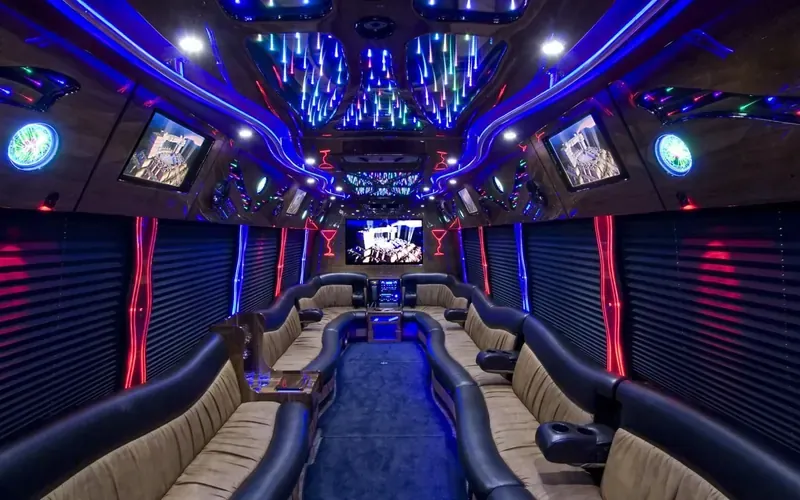
| Large party and reception run | Wedding Party Bus | Up to 20–40 |
| Parents, grandparents and VIP guests | Luxury Sedan & SUV | Up to 3–6 |
| Guests from hotel to church | Shuttle Bus & Mini Coach | Up to 25–56 |
What to put in writing before the day
A Catholic wedding involves the parish, your planner and your drivers, and each needs the same facts. Put the following in writing and share one version with everyone, so the church coordinator and the chauffeur are not working from different assumptions.
If you are planning a second ceremony or a family tradition alongside the Mass, the logistics get busier. Our post on fusion weddings with two ceremonies in one day shows how couples keep both schedules straight, and the earlier piece on a baraat in DC covers how a procession is timed around a ceremony.
- Ceremony time and call timeThe Mass start time, when the church opens to vendors, and when each vehicle should arrive at its first pickup.
- Pickup and drop-off addressesFull street addresses for home, hotel, church and reception, with the entrance the driver should use.
- Run sheet contactThe one person the chauffeur calls on the day, usually your planner or a named family member.
- Group listsWho rides in which vehicle, with phone numbers for the people leading each group.
- Photo stop detailsThe location, the time window and whether the photographer rides along or meets you there.
- Décor requestsRed carpet, signs and similar touches, each written on the quote rather than assumed.
- Alcohol policyThe rules for your vehicles under DC, Virginia or Maryland law, printed on the quote for guests 21 and older.
- Timing buffersThe gap you have allowed for photos, traffic and the receiving line, agreed before the schedule is final.
Planning the transportation for your Catholic wedding
Start with the parish. Ask for the ceremony time, the window for photos inside the church, and any rules about vehicles at the entrance, then confirm the answers with the church office rather than relying on memory. Parish paperwork, coordinator requirements and the rehearsal slot all shape the morning, and they are worth settling months ahead. Our guide to church wedding transportation covers how the driveway, the vestibule and the receiving line affect pickup and drop-off.
Once the church details are set, map the day. Note the drive from the hotel to the church, the church to the photo stop, and the photo stop to the reception, adding time for a weekday commute or a weekend event near the Mall. Share the map with your planner and ask what usually runs long at your venue. If your day includes two ceremonies or a second cultural tradition, the cultural wedding transportation page explains how those schedules are built.
Then request a written, itemized quote covering vehicles, hours, gratuity, tolls, parking, décor requests, deposit and cancellation terms. Every wedding we handle gets one run sheet shared with you or your planner, and on the day the chauffeur stays in touch with your named contact. You can get a free wedding quote once your ceremony time and addresses are settled, and nothing is booked until you accept it.